Friday, 27 March 2015

Smack of Jellyfish: The History of Collective Nouns

Last week at work, a co-worker originally from Vietnam asked me, "I don't get it. I get why in English you have groupings: Collective nouns, like a flock of seagulls. But a murder of crows? A pack of hounds? Who came up with this crap?"

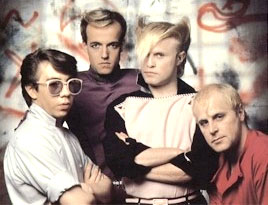
It was the 1980s, a lot of crap was flying around. But I liked A Flock of Seagulls...just not the hair.

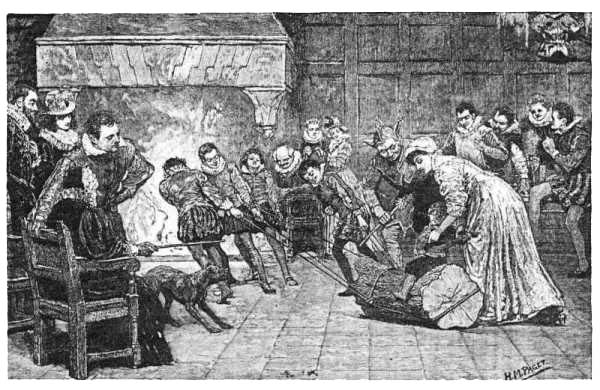
I'm inclined to agree with the crap part. English is weird enough without all the superlatives. Thanks to the BBC History Magazine, we can blame the bored people in the 1400s. Many were first recorded in the 15th century in publications known as Books of Courtesy: manuals on the various aspects of noble living, designed to prevent young aristocrats from embarrassing themselves by saying the wrong thing at court.

The earliest of these documents to survive to the present day was The Egerton Manuscript, dating from around 1450, which featured a list of 106 collective nouns. Several other manuscripts followed, the most influential of which appeared in 1486 in The Book of St Albans – a treatise on hunting, hawking and heraldry, written mostly in verse and attributed to the nun Dame Juliana Barnes (sometimes written Berners), prioress of the Priory of St Mary of Sopwell, near the town of St Albans. This list features 164 collective nouns, beginning with those describing the ‘beasts of the chase’, but extending to include a wide range of animals and birds.

According to the Oxford dictionary, most are fanciful or humorous terms which probably never had any real currency, but have been taken up by antiquarian writers, notably Joseph Strutt in Sports and Pastimes of England (1801).

Some of my favorites:

a blush of boys
a bevy of ladies
a faith of merchants
a pity of prisoners
a clowder or glaring of cats
a herd of cranes
a busyness of ferrets
a fluther or smack or jellyfish
a watch of nightingales
an unkindness of ravens
a drift of wild pigs
a zeal of zebras
A cute clowder of cats! Mew!

Tuesday, 17 March 2015

Kiss Me We're All Irish: St. Paddy's Day

At the Montreal Parade, because there's a lot of Leprechauns there...

Happy Green Beer day everyone! Many Canadians and Americans, regardless of their heritage, will be out celebrating Saint Patrick’s day. Modern festivities include Irish and Celtic music, lots of food, and lots of beer. While this is the tradition in Canada, the saint’s day was originally a day of prayer.

Someone actually made a St. Patrick crochet doll. Where's the snakes?
For centuries, St. Patrick’s day was celebrated as a holy day. St. Patrick was a Roman-British priest that brought Christianity to Ireland. He also is credited with driving all the snakes out of Ireland, but we know where they all went (looking at you, England). He is said to have died on 17 March 461 AD. His popularity in Ireland grew to being named the country’s patron saint. By the 900s, the Irish celebrated his memory by attending church and holding feasts. It was made a recognized Catholic feast day in the 1600s. It falls during the Christian season of Lent, and Lent’s tight prohibitions against the eating of meat were released. After attending mass, people would dance, drink and enjoy the traditional meal of corned beef (Irish bacon and just awesome) and cabbage.

One big part of modern celebrations is massive parades. The first one was not in Ireland, but was held in America, on March 17, 1762. Irish soldiers serving in the English military marched in New Amsterdam (New York), were trying to keep their own culture alive in this new country. New York City became a major centre for Irish Diaspora, and the parades continued and spread to all parts of North America. More than one hundred parades are now held, and have expanded into Irish festivals such as the Irish Association of Manitoba three-day festival of culture in the week of St Patrick's Day.

At the Boston Parade: "Bloody hell, Bobby! That ain't St. Nick - he just gave us a bag of snakes!"

Another tradition is to wear green on the day of; it is said that St. Patrick taught the Irish about the trinity (Father, son and the holy spirit) by using a clover. This may be where the North American tradition of wearing green and clovers came from. However, the color was long considered to be unlucky in Ireland. Irish folklore holds that green is the favorite color of the fairies. In modern celebrations, however, the Irish use the clover green in celebrations.

The more modern drinking aspect of St. Patrick’s day happened in North America, not Ireland, until very recently. Up until the 1970s, St. Patrick’s was seen as a holy day only and pubs were closed. When that rule was lifted, more people went back to the tradition of feast and lifting a few drinks. A major St. Patrick’s festival is held in Dublin to bring tourists and locals together to celebrate Irish culture. So as my Great-grandad would have said: sláinte! (Cheers and get wasted)


Irish whiskey Irish dancing Shamrocks Book of Kells Uilleann pipes ...
Whiskey, music, dancing, rugby with an edge of cool castles: these are my kind of people. Could do without the Bono though.

Monday, 23 February 2015

History of Yoga: And Yoga Cats!


Part of a serious practice is corpse pose. Feel the ahhhhhh.

Yoga is the answer for a lot of my pain, mentally and physically. A good workout or a deep yoga nidra and I'm less likely to try and chew off my own arm, or someone else. But I'm not crazy and think it's going to cure all: not once have I heard a real teacher say, "Screw modern meds for your cancer of the eyelash, just do yoga." Recently I'm reading a lot of crap on line where they claim just that. I call bullshit.

I went to a class to get some help with my alignment (because if you do it wrong, it's all sorts of bad). There I asked my teacher what his understanding of the history of yoga. He said that while many people try to say it's ancient, and that's partly true. However, the modern form with all these funky town moves were invented in the 1960s. We had a great chat, and this article came out of our discussion. His basic points, and what texts I've been reading are pretty clear: it's not about the clothes, the props, the hip inner city studios, or putting your foot behind your head. But it is fun, there's cats!

Cat yoga: buddha cat
Cookie the Buddha Cat in the beginnings of a forward fold.


You Keep Using That Word...


...but I don't know if you know what it means. Yoga is a Sanskrit term, the language of ancient India. In A History of Indian Philosophy, commentators on the ancient Sanskrit texts like the Yoga Sutras of Patanjali, can't quite agree on its original meaning. The root yuj samādhau derived from either of two roots, yujir yoga (to yoke) or yuj samādhau (concentrate, concentration).

The term "yoga" has been applied to a variety of practices and methods. The majority are based in the Hindu schools of thought:  Jnana Yoga, Bhakti Yoga, Karma Yoga, Laya Yoga, Hatha Yoga, and Ashtanga Yoga (also called Raja Yoga.). I'm not going into all of them or you'll wonder if I'm a little yoga nuts, but all you need to know is that it's closely associated with the meditative practices in Hinduism, Buddhism, and Jainism, and yoga is viewed differently by each of these schools of Hindu philosophy. The earliest signs of yoga appear in ancient India. Evidence of yoga postures were found on artifacts that date back to 3000 B.C. Evidence of yoga is found in the oldest-existing text, Rig-Veda. Rig-Veda is a composition of hymns. Topics of the Rig-Veda include prayer, divine harmony, and greater being. But for me, the quote that sums it all up:

"The traditional purpose of Yoga, however, has always been to bring about a profound transformation in the person through the transcendence of the ego," (Feuerstein 3)


Yoga and Independence

To get an overall idea, my teacher directed me to the excellent material by Mark Singleton online and books. He writes that the modern practice is a branch of the giant tree of yoga. In India, the practice was focused less on the physical and more on Pranayama (expansion of the vital energy by means of breath), dharana (focus, or placement of the mental faculty), and nada (sound). At the end of the 19th century, yoga was introduced to Europe and North America by English educated Indians as a practice of meditation, breath and positive thinking. A lack of interest in poses was a high case, low caste issue, as the only ones who practiced them were mendicants who performed severe and rigorous postures for money, and partly to the centuries of hostility and ridicule by Western colonialists, journalists, and scholars.

Singleton believes that the fusion of poses and the mental came together in India as part of the struggle for national independence. By building better bodies, the leaders believed it would make for a better nation and improve the chances of success in the event "of a violent struggle against the colonizers". They used a wide variety of exercise systems melding Western areobatics with traditional Indian practices like wrestling. The name given to these strength-building regimes was “yoga.”

One nationalist physical culture reformist Manick Rao, blended European gymnastics and weight-resistance exercises with revived Indian techniques for combat and strength. Rao’s most famous student was Swami Kuvalayananda (1883-1966). During the 1920s, Kuvalayananda, along with his rival and gurubhai (“guru brother”) Sri Yogendra (1897-1989), blended asanas and indigenous Indian physical culture systems with the latest European techniques of gymnastics and naturopathy.The other highly influential figure in the development of modern asana practice in 20th-century India was, of course, T. Krishnamacharya (1888-1989), who studied at Kuvalayananda’s institute in the early 1930s and went on to teach some of the most influential global yoga teachers of the 20th century, like B.K.S. Iyengar, K. Pattabhi Jois, Indra Devi, and T.K.V. Desikachar.

I agree with Singleton 100 percent when he speaks on the purpose of knowing yoga's history:
Beyond mere history for history’s sake, learning about yoga’s recent past gives us a necessary and powerful lens for seeing our relationship with tradition, ancient and modern. At its best, modern yoga scholarship is an expression of today’s most urgently needed yogic virtue, viveka (“discernment” or “right judgment”). Understanding yoga’s history and tangled, ancient roots brings us that much closer to true, clear seeing. It may also help to move us to a more mature phase of yoga practice for the 21st century.
On the note of maturity...
 

Saturday, 17 January 2015

They're Not Dolls: History of Action Figures

This week's history question comes from a fan of action figures: "How old are actions figures? Are they a recent invention? Did they have them in the ancient world?"

Playing with dolls, date unknown.
Boy playing with dolls goes way back people...

The first sort of action figure would be figurines: statuettes that represents a human,deity or an animal. That does not mean kids got to play with the statue of the baby Jesus. Unless you were like me and I kept stealing the little guy at Christmas out of his nativity scene. Figurines were and are for art or religious purposes. So no chewing on that miniature of Zeus now, ok?

When they have movable parts that can be posed, they are either dolls or action figures. The earliest example of a 'doll' is from Italy. In 2004, archaeologists dug up a 4,000-year-old stone doll head in the ruins of a village on the Italian island of Pantelleria. That the head wasn't found in a ceremonial ground made it different than most ancient human figures and suggests that it was probably a toy. It had curly hair and was buried with miniature kitchenware.

Action figures: A modern invention. 


A prototype GI Joe from 1963. He's seen a lot. Because war is hell, children.

While toy company Mattel was kicking ass with it's new Barbie dolls in the early 1960s, its competitor, Hasbro, realized they have nothing going on except Monopoly and Tonka. According to legend, a licensing agent named Stan Weston brought the concept to Don Levine at Hasbro, with the idea of creating a poseable soldier for boys. Hasbro saw its chance and in 1963, they began development on a military-themed line of 12" dolls that, like Barbie, could be accessorized with different outfits and equipment. He would be called G.I. Joe, the World War II shorthand symbol for the typical serviceman, or "Government-Issue Joe." The term doll was replaced with "Action Figure"by someone at Hasbro, because as we know, boys don't play with dolls. Please read this with a sarcastic tone.

Don Levine, who served in the Army in Korea, said he got the idea for the moveable figure as a way to honour veterans. G.I. Joe was launched in1964 during the Christmas shopping season and was a big seller at $4 apiece.“Don Levine and his team took it from a good concept to a great concept,” said Alan Hassenfeld, Hasbro’s former CEO whose father, Merrill, oversaw G.I. Joe’s development when he ran the company. Levine died in 2014.

The plan called for a different figure for each branch of the military: Soldier, Sailor, Marine, and Pilot. Sales the first three years were enormous, and Hasbro aggressively rolled out new products that evolved the line, like the Five Star Jeep, Mercury Space Capsule, Deep Sea Diver, footlocker, Green Beret, and Soldiers of the World. Buoyed by their success, Hasbro even tried a few new products, like the G.I. Nurse which failed badly.G.I. Joe retained his military theme from 1964 until 1968.

The original collection,not including any reference to the Village People or YMCA.

Many other companies developed their own version of G.I. Joe as well. My brother Steve recalls playing with Major Matt Mason, a astronaut brought out as competition by Mattel in the 1960s.

But the end of the decade, sales were faltering, as they were for all military-themed toys.G.I. Joe retired from military service and became an Adventurer with a beard. He now adventured in outer space, the far-flung African deserts and jungles, and the unexplored undersea world. No one bought it and the brand continued to falter until production ceased in 1976.

Joe is Reborn But Loses Himself


I really wanted that Darth Vader case for some reason.

Action figures changed dramatically in the late 1970s with their shrinking in size. Toy manufacture Kenner won the rights to produce toys for a new film called Star Wars. They decided on creating a 3-3/4" toy line, which became insanely popular. It made the newer, smaller size the industry standard. Instead of a single character with outfits that changed for different applications, toy lines included teams of characters with special functions.In response, GI Joe was re-launched in 1982 as a smaller 3 3/4" action figure. The line was also re imagined as an elite military unit dedicated to defending freedom against the evil Cobra organization. So GI Joe was no longer one dude killing commies, but a whole unit of awesome unleashed on terrorist. Cool.

Here's more on the history of GI Joe, if you like that sort of thing.

Monday, 22 December 2014

Not So Silent Night: The History of Christmas Carols

Carol book from 1950s, Snow Golem eats kids later.

Christmas carols can mean the tender tones of choirs of angels singing, or the local punk band screaming Rudolph the Red Nose Cowboy. It's really your choice. I prefer the more traditional ones, despite my lack of personal interest in a supreme being. But I am interested in all things historical, including why we warble carols at this time of year.

I love etymology as much as I love history. The Oxford Dictionary states that carol or carole is a medieval word of French and Anglo-Norman origin. It was believed to mean a dance song or a circle dance accompanied by singing. They were first just hymns sung in a christian church. When the Catholic church first started using hymns in the 300s, the songs were pretty boring. The introduction of rhyme, along with the cultivation of pagan lore created the first carol sometime in the 1100s: “Veni, redemptor gentium," or “Savior of the Nations, Come,” attributed to Milanese Bishop St. Ambrose. But they were sung in Latin, and not the local languages, which was about as exciting as drinking fat free eggnog.

The awesome patron saint of Animals and decent music, St. Francis of Assisi, recognized the unpopularity of Christmas hymns, and set out to change it by transforming the holiday through theatrics, music, and for the first time, carols sung in audiences’ native languages. The abandonment of Latin in the thirteenth century was popularized in nativity scenes and productions across Europe. And there was much rejoicing.

Christmas carols in English first appear in a 1426 book by a chaplain named John Awdlay, who lists twenty five "caroles of Cristemas", probably sung by groups of wassailers. Wassailing comes from the Old English term "waes hale, meaning "be well". It was a Saxon custom that, at the start of each year, the lord of the manor would shout 'waes hael'. The assembled crowd would reply 'drink and be healthy'.

Carol singers in the mid 1800s still looking for some Christmas beer, I mean cheer.
The tradition was carried on by people going from door to door, bearing good wishes and a wassail bowl of hot, spiced ale. In return people in the houses gave them drink, money and Christmas special foods like mince pies, and they believed they would receive good luck for the year to come. Carols then are really booze songs.
 
When Oliver Cromwell and the Puritans came to power in England in 1647, the celebration of Christmas and singing carols was stopped. However, the carols survived as people still sang them in secret. Carols remained mainly unsung until Victorian times, when two men called William Sandys and Davis Gilbert collected lots of old Christmas music from villages in England. People revitalized the practice so much that popular books like Dickens' A Christmas Carol with the carolers being scared off by old Scrooge.

Bring on the tunes, the cheer, and the malnourishment of 1860s Christmas. At least they had a tree.
How about the origins of my favorite carols sung today, Silent Night? In 1818 the carol "Stille Nacht! Heilige Nacht" was performed in the village church in Oberndorf, Austria at Midnight Mass. It was written by the assistant pastor, Father Joseph Mohr, and the choir director, Franz Xaver Gruber, to be accompanied on the guitar, an usual decision. On each of the six verses, the choir repeated the last two lines in four-part harmony. It was meant to be a nice song for the local folks to sing, but it's popularity grew as folk singers started performing it elsewhere. Too bad no one believed them that they wrote it until proof int eh form of an original surfaced in 1994. Good thing they had day jobs.

Monday, 15 December 2014

Oh Christmas Bush, Oh Christmas Bush: The History of Christmas Trees

Way back when I was small, my father brought home a fresh pine Christmas tree. However, it was small and sort of bushy. My brother Dave decided it needed its own song, so taking a nod from Oh Christmas Tree, it became Christmas Bush. And it was, despite the decorating and the old 50s angel on top.

Similar to the one we had - that dead look was popular.

That began to make me think: Why? When did humans start cutting down trees and putting them up to shed all over in their house? 


Since we figured out how nice they were to have around! Evergreen trees have been associated with seasonal celebrations since ancient times, especially during the winter solstice. People would put boughs, trees and rings of plants that remained green in the winter remind people that spring will return and that once again the land would be lush and abundant. Where our Western traditions originate, the shortest day and longest night of the year falls on December 21 or December 22 and is called the winter solstice. Many ancient peoples believed that the sun was a god and that winter came every year because the sun god had become sick and weak. They celebrated the solstice because it meant that at last the sun god would begin to get well. Egyptians, Romans, Druids, Vikings, Anglo-Saxons, Spaniards and Slovaks are some of the people that used evergreen trees to decorate their homes.

The Christians took over the trees!


In the 7th century a monk named Boniface from Devonshire, went to Germany to convert them to Christianity. Legend has it that he used the triangular shape of the Fir Tree to describe the Holy Trinity of God the Father, Son and Holy Spirit to the pagans. The converted people began to revere the Fir tree as God's Tree, as they had previously revered the Oak. By the 12th century it was being hung, upside-down, from ceilings at Christmastime in Central Europe, as a symbol of Christianity. The first documented decorated tree was at Riga in Latvia, in 1510. In the early 16th century, Martin Luther is said to have decorated a small Christmas Tree with candles, to show his children how the stars twinkled through the dark night.

Modern Trees: thank Royalty! 


In 1846, Queen Victoria and her German Prince, Albert, put up a Christmas tree as he did when he lived at home. They were sketched in the Illustrated London News standing with their children around a Christmas tree. Her British subjects - who actually liked her- thought that this was very cool and fashionable and started to do the same.

Fashionable but seriously somber here.

By the 1890s Christmas ornaments were arriving from Germany and Christmas tree popularity was on the rise around the Western world. It was noted that Europeans used small trees about four feet in height, while Americans liked their Christmas trees to reach from floor to ceiling. Canadians don't really care as long as there is nothing living in it. People mostly made their own ornaments, while the German and their descendants use apples, nuts, and marzipan cookies. Popcorn joined in after being dyed bright colours and interlaced with berries and nuts. Electricity brought about Christmas lights, making it possible for Christmas trees to glow for days on end. With this, Christmas trees began to appear in town squares across the country and having a Christmas tree everywhere took hold.

One of the largest public Christmas trees ever was put up last year in Coeur d’Alene Resort in Idaho. It is 162 feet (49.5 m), with the star on top adding another 10 feet (3 m) high. These people are serious about Christmas in Idaho.

Biggest Christmas Tree
But not the fullest.


Sunday, 7 December 2014

Yule VS Christmas: Origins

Tis' the season for stuffing your body into your special suit and fancy dress, eating way too much, and howling Silent Night over the church choir. Or at least that's what I recall as a child. The festival of Christmas has changed over the years for me. Now it means family and friends, good food, and making crochet gifts for nieces and nephews. (Watch out guys for that tea cozy you always wanted)

Historyminion wise, I'm going to celebrate by posting a lot on the history of Christmas, traditions, and terrors.

Let's start with Yule versus Christmas. Is it really the same thing?


The Scandinavians in the 1500s getting ready to burn the Yule log and get wasted! Imp included.

Yule goes back, way back, to the 700s. The word is from the Old English geol, geola "Christmas Day, Christmastide," from Old Norse jol (plural), a heathen feast, later taken over by Christianity, as a lot of things were. The priests wanted to con everyone into falling for their new fangled religion by adopting already know traditions. They were assholes like that.

The Old English giuli was the Anglo-Saxons' name for a two-month midwinter season corresponding to Roman December and January, a time of important feasts but not itself a festival. After conversion to Christianity it narrowed to mean "the 12-day feast of the Nativity" (which began Dec. 25), but was replaced by Christmas by the11th century. However, the northern areas of Danish settlement it remained the usual word and festival. Across Scandinavia, great yule logs were burned, and people drank mead around the bonfires listening to minstrel-poets singing ancient legends. It was believed that the yule log had the magical effect of helping the sun to shine more brightly.
 
Yule was revived in the 19th century by bored writers to mean "the Christmas of Merrie England." probably because it sounds sort of old and cool. Now neo-pagans like followers of Wicca, who I think like to pretend to be spell casters and like to run nude in the woods, celebrate Yule. For them, it's part of the Winter Solstice. 

Very few people today would shout out "Happy Yule Tidings" or "Merry Yule" though.


Christmas, on the other hand, is not as old as Yule, but is up there. It's Middle English for Christemasse, which is from Old English Cristes mæsse, literally, Christ's mass. It was used before 12th century.

Early Roman texts and calenders (about 360 CE) mentions the celebration on December 25 of a Christian liturgical feast of the birth of Jesus. In Eastern Christianity, the birth of Jesus was celebrated, and still is on January 6th at the Epiphany. (When they figured out Jesus was god born as man). The Donatists of North Africa celebrated Christmas may indicate that the feast was established by the time that church was created in 311.

Roman carving of celebrating the God of Light, which the Christian god stole a lot of ideas from. Check out the halo.
And was Jesus actually born in the winter? Most scholars agree that the presence of shepherds and their sheep suggest a spring birth. When church officials settled on December 25 at the end of the third century, they likely wanted the date to coincide with existing pagan festivals honoring Saturn (the Roman god of agriculture) and Mithra (the Persian god of light). Again, the Christians knew how to piggy back on someone elses good time. And because of that religion's ability to change and adapt everything around it like the borg, (geek reference), it beats out Yule. How do we know? I don't hear Have Yourself a Merry Little Yule, do you?

Next Time: How did they celebrate Christmas in Medieval Times? If you're expecting any gifts, you're going to be disappointed.