Thursday, 23 July 2015

Justice League! History of Nazi Hunters

Are there actual super heroes in the world? 


Yes. But they wear tights and live in Canada.

I think I may have found them: Nazi-hunters! Usually a private individual who tracks down and gathers information on alleged former Nazis who may have perpetrated the Holocaust in Europe during World War II, with the goal of bringing them to trial.

Recently they're in the news with the trial of Oskar Groening. This week he confessed and the German court ruled that he was guilty of being an accessory to the murder of 300,000 Jews and sentenced him to four years in prison:
The 94-year-old, who testified that he oversaw the collection of prisoners' belongings and ensured valuables and cash were separated to be sent to Berlin, listened expressionlessly to the verdict after a 2 1/2-month trial that could set a legal landmark. "This verdict was critical, because this is the first case brought where the prosecution charged a person who wasn't involved in the physical side of mass murder," said the Simon Wiesenthal Center's head Nazi hunter, Efraim Zuroff, in a telephone interview from Belgrade. "This paves the way for additional trials of individuals who did not literally pull the trigger but who were part of the implementation of the Final Solution."

It sounds so ultra-cool to be honest: who wouldn't love to hunt down evil doers? Are these guys real super-heroes?

The first Nazi Hunter:


simon wiesenthal Simon Wiesenthal, cazador de nazis austriacos famosos
Mr. Simon Wiesenthal. The sweetest looking man, ever.

One of the most well known hunters is Simon Wiesenthal was born on December 31, 1908, in Buczacz, in what is now the Lvov Oblast section of the Ukraine.  He attended the Technical University of Prague, from which he received his degree in architectural engineering in 1932. In 1936, Simon married Cyla Mueller and worked in an architectural office in Lvov. Their life together was happy until 1939 when shit went down: the purge of Jews by the Germans. As a result, by September 1942, most of his and his wife's relatives were dead; a total of eighty-nine members of both families perished.Wiesenthal himself survived after surviving a concentration camp - Mauthausen - which was liberated by an American armored unit on May 5, 1945. His wife as well had escaped. He didn't know she was alive but they reunited and had a daughter.

Wiesenthal began gathering and preparing evidence on Nazi atrocities for the War Crimes Section of the United States Army. After the war, he also worked for the Army's Office of Strategic Services and Counter-Intelligence Corps and headed the Jewish Central Committee of the United States Zone of Austria, a relief and welfare organization.

The evidence supplied by Wiesenthal was utilized in the American zone war crime trials. When his association with the United States Army ended in 1947, Wiesenthal and thirty volunteers opened the Jewish Historical Documentation Center in Linz, Austria, for the purpose of assembling evidence for future trials. But, as the Cold War between the United States and the Soviet Union intensified, both sides lost interest in prosecuting Germans, and Wiesenthal's volunteers, succumbing to frustration, drifted away to more ordinary pursuits. In 1954, the office in Linz was closed and its files were given to the Yad Vashem Archives in Israel, except for one - the dossier on Adolf Eichmann, the inconspicuous technocrat who, as chief of the Gestapo's Jewish Department, had supervised the implementation of the "Final Solution."

No - not that final solution...more like 6 Down: commit mass genocide.

While continuing his salaried relief and welfare work, including the running of an occupational training school for Hungarian and other Iron Curtain refugees, Wiesenthal never relaxed in his pursuit of the elusive Eichmann who had disappeared at the time of Germany's defeat in World War II. In 1953, Wiesenthal received information that Eichmann was in Argentina from people who had spoken to him there. He passed this information on to Israel through the Israeli embassy in Vienna and in 1954 also informed Nahum Goldmann, but the FBI had received information that Eichmann was in Damascus, Syria. It was not until 1959 that Israel was informed by Germany that Eichmann was in Buenos Aires living under the alias of Ricardo Klement. He was captured there by Israeli agents and brought to Israel for trial. Eichmann was found guilty of mass murder and executed on May 31, 1961.

Encouraged by the capture of Eichmann, Wiesenthal reopened the Jewish Documentation Center, this time in Vienna, and concentrated exclusively on the hunting of war criminals.He kept hunting Nazis till the end of his life. He died in 2005 at the age of 96.
 
Among Mr. Wiesenthal's many honors include decorations from the Austrian and French resistance movements, the Dutch Freedom Medal, the Luxembourg Freedom Medal, the United Nations League for the Help of Refugees Award, the U.S. Congressional Gold Medal presented to him by President Jimmy Carter in 1980, and the French Legion of Honor which he received in 1986. Wiesenthal was a consultant for the motion picture thriller, The Odessa File (Paramount, 1974). The Boys From Brazil (Twentieth Century Fox, 1978), a major motion picture based on Ira Levin's book of the same name, starring Sir Laurence Olivier as Herr Lieberman, a character styled after Wiesenthal.

The Boys from Brazil (1978)
And you know the evil guy by his mustache...

Wiesenthal's biographers credited him with ferreting out 1,100 of Adolf Hitler's major and minor killers and other Nazi war criminals since World War II. “When history looks back,” Wiesenthal said, “I want people to know the Nazis weren't able to kill millions of people and get away with it.”

One centre  is mentioned above, the Simon Wiesenthal Centre. Based in LA, they're a global human rights organization researching the Holocaust and hate in a historic and contemporary context. Not just a bunch of renegades, they are accredited as an NGO at international organizations including the United Nations.Their skills help uncover and locate where possible Nazis around the world are still in hiding. It's hard work:  first you got to find them; get enough evidence; and then persuade the authorities to act. They are still at it even though so many are so old and well, dead.
What a nice thought that eventually those bastards are worm food too.

An odd personal connection for me: a friend from university does historical research on Belarus and Ukraine and he had a lot to do with one war criminal hiding in Canada - Vladimir Katruuk served as a platoon commander of the first company of Ukrainian Schutzmannschaft Battalion 118 which carried out the murder of Jews and innocent civilians in various places in Belarus. He escaped to Canada after World War II but was stripped of his Canadian citizenship in January 1999, after his service as a Nazi collaborator was revealed. In May 2007, the Canadian authorities decided to overturn his denaturalization, a decision confirmed by the Federal Court of Appeal in November 2010. New research by Swedish historian Dr. Per Anders Rudling revealed Katriuk’s active role in the mass murder of the residents of the village of Khatyn, Belarus and provides a firm basis to overturn the decision not to strip Katriuk of his Canadian citizenship. 

Nice job sir. To read more on his research, go read this.

Next week's article is a little lighter: when did we start keeping pets?

... -pets/][img]http://www.imgion.com/images/01/Cute-Pets.jpg[/img][/url
After all that Nazi talk, I needed a cuddle.

Thursday, 2 July 2015

Beauty Onstage: Actress Promotional Cards

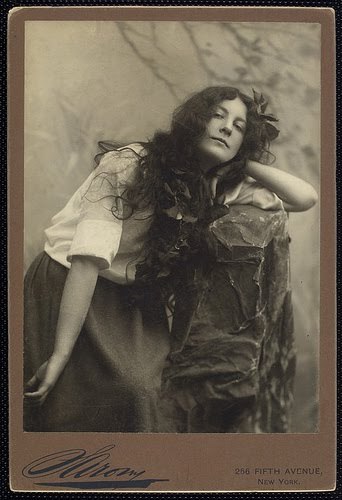
Vesta Tilley
Vesta Tilly - Not her real name.
I was in need of some cheering up: Summer was starting and I was boiling like a potato in a deep fat fryer on fire.

I wandered down to an antique shop I know of and their wonderful air conditioned building. As I dug around, I found a pile of amazing pictures. These weren't the random dead people photos that relatives toss out after a person passes. It was a pile of old stage actress photocards. These cards, primarily done in the late Victorian and Edwardian periods, were printed up to promote not only the actress but the next show she would be in. The actress would be often photographed in costume.

Just like our movie stars today, people were fascinated by the stage actresses of their era. In the Victorian Era, most actresses came from an acting family. This was not a glamorous job, and a thing such as comfort was unknown. Minor actresses had to take up whatever roles they were given in order to gain visibility so that they could rise to the top. They had to be tough: many worked their way through music halls, live nude shows, and harassment.

Despite the social pressure to stay home and have children, women continued to take to the boards. The U.S. census shows that from 1870-1880 the number of women who declared "actress" as their profession rose from 780 to 4,652 (an increase of 596%). By 1910 that number was 15,432 (up 332%).3 This surge of women to the stage that saw 25 new women to every one new man was signified not only economic opportunity but "social and sexual independence."4  Women obtained wealth, mobility and social power through their new found dominance in the theater.

The life of an actress, however, was not always a glamorous one. While stars could command a salary of up to $150 a week in the 1900s,  most chorus or ballet girls made between ten and twenty-five. Most actors were not paid for rehearsal time and since the theater season lasted for thirty to forty weeks a year, players could usually expect long layoffs. While beauty was deemed an asset for an actress in terms of landing roles, even more important was the quality of her dress. Featured actresses were expected to supply their own costumes, which could cost between three hundred and four hundred dollars a season. Newspaper columnists often devoted a good deal of space to a wardrobe review.

Here are some of the pictures I found on Pinterest of some amazing actresses:

Sarah Bernhardt (1821-1896)

Sarah Bernhard is one of the most famous stage and film actresses of all time. Born in France she was referred to as "the most famous actress the world has ever known".[3] Bernhardt made her fame on the stages of France in the 1870s, at the beginning of the Belle Epoque period, and was soon in demand in Europe and America. She was a serious actress and starred as Hamlet in an early film.

Just too cool for anything.

Lillie Langtry (October 13, 1853 – February 12, 1929), usually spelled Lily Langtry when she was in the U.S., born Emilie Charlotte Le Breton, was a British music hall singer and stage actress. She was also known for her relationships with nobility, including the Prince of Wales, Albert Edward, the Earl of Shrewsbury and Prince Louis of Battenberg.
Relationship is code for mistress

Lillie Langtry

LL (October 13, 1853 – February 12, 1929), usually spelled Lily Langtry when she was in the U.S., was born Emilie Charlotte Le Breton. She was a British music hall singer and stage actress. She was also known for her relationships with nobility, including the Prince of Wales, Albert Edward, the Earl of Shrewsbury and Prince Louis of Battenberg.


Lily Elsie (born Elsie Hodder; 1886–1962) was a popular English actress and singer during the Edwardian era, best known for her starring role in the hit London premiere of The Merry Widow in 1907 which this picture promoted. She began as a child star in the 1890s in music halls. Elsie built her reputation in several successful musical comedies. Afterwards, she starred in several more successful operettas and musicals. Admired for her beauty and charm on stage, Elsie became one of the most photographed women of Edwardian times.

The Merry Widow, Lily Elsie.
A very merry widow has to be well dressed!

And my personal favorite: Maud Allan

A fellow Canadian, she was born in 1873 in Toronto and died in Los Angeles in 1956. Her real name was Beulah Maude Durrant, and she was very well educated, having studied in San Francisco, studied music in Berlin, made professional debut in Vienna, and gained stardom in London. She's recognised as a pioneer of western early modern theatre dance. This photograph is from her 1908 appearance in 'Salome' at the London Palace Theatre. She caused a huge sensation when rumours spread that she appeared completely naked beneath her flimsy costume for her provocative 'Vision of Salomé' dance.

She clearly is not wearing much of anything and looks like a woman who could care less what you think.


Thursday, 28 May 2015

History Now: International History News (Includes Canada)

It's been a busy spring for me personally but also professionally. While I've been working like a dog, (a small pug I think), let's see what's been making the news the last few months in local and world history.

First, a tip of the pink stetson to Calgary! 


It's the 25th anniversary of the Calgary Pride Festival. The festival and the events surrounding it (including the parade) is run by Calgary Pride. The CPF is a not-for-profit organization that exists to promote equality and acceptance of Calgary’s LGBTQA community. My friend Kevin Allen wrote in the Gay History Project blog that Calgary’s first “Pride Week” started as a weekend of workshops in 1988.  In 1990, Calgary’s 3rd Annual “Pride Festival” had a political rally that drew 400 at Memorial Park, on the steps of the library. The first real parade was in 1991, and was actually part of the 4th Annual Pride Festival. This year's parade will be September 6 down 9 Avenue SE to SW downtown.

CLAGPAG Today 2
We thank you: Stephen Lock, Nancy Miller & Richard Gregory: 1990 Pride Rally Organizers. From Gay History.


Why do I know so much about Queer (Gay) history in my hometown? I'm one of the researchers for the Gay History Project and will be presenting at the Glitter Gala next month. Come have fun and hear me make history interesting!

I'm On the Road to Stonehenge


Next, I want you to take some deep breaths before you read this next news story.

 The brilliant people who are road planners in the UK are hoping to get a traffic tunnel dug under Stonehenge. In 2013, a major roadway near the giant rock circle was partly closed, because it was damaging the site. However, traffic has been insane as there is a major road corridor near the site. The answer: build a tunnel: The BBC Reports:

Deputy Prime Minister Nick Clegg said the plan to "tackle the bottleneck at Stonehenge" would "get the funds it needs". English Heritage, which runs the Stonehenge site, has previously described the bottleneck road as "highly detrimental" to the ancient monument. Senior Druid King Arthur Pendragon has also backed the idea of a tunnel, but only if there are "cast-iron" guarantees that any human remains found "are reinterred as close as possible to what should have been their final resting place".

A group that advises World Heritage body Unesco has warned a tunnel could have an "adverse impact" on the Stonehenge landscape. In a letter seen by the BBC, the International Council on Monuments and Sites (Icomos) said it wanted a solution that "respects and maintains" the value of the "iconic and unique site". Ralph Smyth of the Campaign to Protect Rural England (CPRE) said it was "calling for a longer tunnel", as the proposed tunnel was too short and would create two "huge holes" which would affect the landscape around the World Heritage site.
OOOOOH....now where's the MacDonald's?

Screw You Labour History


Let's head back to Canada for the next bit with some serious controversy. The Museum of History in Ottawa has announced that they are excluding a display on the 1919 Winnipeg General Strike will be excluded from the renovated areas, but officials promise the labour movement will still have a home in its halls.

According to a document obtained by the Ottawa Star in response to an access to information request, the Canadian Museum of History in Gatineau, Que., saw there were few risks (???) surrounding the decision to shut down the exhibit.

Here is the part that pisses me off...

“Changes can be made to the module with few political or institutional risks,” reads the summary of a draft renovation risk assessment, revised Aug. 22, 2014. "Some comments by academics cite the closure as evidence of the museum’s lack of interest in working class history . . . . The removal of this module represents minimal risk to the museum, though it will entail communications challenges to the academic community,” says the document.

OK - WAIT A MINUTE. So academics are the only people interested in working class/labour issues? Classes of school kids that have it in their curriculum to learn about the history of the strike and other labour issues are dismissed as "academics"? Thank you for your condescending air. Sorry that as a working class person you want to know more about our history, or recall how mostly soldiers were the ones striking as they were promised things the govt. and businesses never delivered for dying on the fields in WWI.

Canadian Museum of History
Go fuck yourself History Museum. Never thought I'd say that.
The exhibit, which opened in 1999, was modelled after a meeting room in the Labour Temple on James St. in Winnipeg, where union members met to debate, organize and vote in the months leading up to, and during, the massive strike. It's being removed to make room for the Canadian History Hall, which is scheduled to open July 1, 2017. I'll be dammed if I go.

Because 30,000 people is just not that important. Sorry guys.

The Canadian Museum of History has come under public scrutiny in the past couple of years, following a controversial change in name — it was formerly known as the Canadian Museum of Civilization — and mandate that had critics accusing the Conservative government of using the Crown Corporation to rewrite history in its image.

Chinese Tomb Reveals Awesome Bling


Lastly, something less depressing and way more flashy. After workers discovered the brick tomb by chance at a construction site in Nanjing, China, archaeologists from Nanjing Museum and the Jiangning District Museum of Nanjing City excavated it back in 2008. Their findings, originally published in Chinese in the journal Wenwu, have recently been translated into English and published in a recent issue of the journal Chinese Cultural Relics. (Reported by History TV)

The archaeologists found that water had damaged the tomb, but the occupant’s skeletal remains remained inside. In addition, the tomb’s interior sparkled with gold baubles, including hairpins, bracelets and a small fragrance box. All are intricately engraved in designs of lotus petals, chrysanthemums and flames, and all are inlaid with precious gems, including rubies, sapphires and turquoise.

Credit: Chinese Cultural Relics
BLING!
 
The owner of the tomb had a beautifully adorned but challenging life. Her story really tells a lot about women in Traditional China, their lives and their deaths.
Two stone inscriptions, or epitaphs, found inside the tomb identify its occupant as one Lady Mei, and tell the story of her life in Ming Dynasty China more than five centuries ago. Born around 1430, she was probably a teenager when she married the decades-older Mu Bin, a duke of Qian who ruled Yunnan province in southwestern China. A former concubine, she would probably have been lower in status than Mu Bin’s two other wives.

Ten months after she gave birth to a son, Mu Zong, her husband died. According to her epitaphs, Lady Mei was then only 21 years old, “unwashed and unkempt, and called herself the survivor.” She dedicated herself to the care of her infant son, and began carefully grooming him to become a third-generation duke. Among other things, she “urged him to study hard mornings and evenings, and taught him loyalty and filial devotion, as well as services of duty.”

When it was time for Mu Zong to take the reins in Yunnan, Lady Mei traveled with him to meet the Chinese emperor, who was impressed by Lady Mei and later awarded her the title “Dowager Duchess.” Her son gave her much respect, and turned to her for advice on being a judicious leader and a faithful representative of the emperor. Specifically, as the epitaphs relate, she provided Mu Zong with “strategies for bringing peace to the barbarian tribes and pacifying faraway lands.”
Lady Mei was only in her mid-40s when she died of illness in 1474. She was brought to Nanjing for burial; the city served as the capital of China during the early Ming Dynasty. The emperor himself apparently ordered officials to prepare for Lady Mei’s funeral and burial. Meanwhile, the epitaphs describe widespread mourning for the Dowager Duchess back in her son’s province: “On the day of her death, the people of Yunnan, military servicemen or civilians, old and young, all mourned and grieved for her as if their own parents had passed.

Monday, 20 April 2015

Digging in the Dirt: Canadian WWI Soliders Grave located in France

The Battle of Vimy Ridge.jpg
Richard Jack's painting of the Canadian's at Vimy Ridge, Library and Archives Canada. No zombies were present.

We often think that World War One is in the far off land of the past: a place we read about but has no affect on our daily life. Well, we're wrong. Not only does the outcomes of the war still affect us today, as my rant about Israel and Palestine covers, but the men who died still keep popping up. No: I don't mean some tacky war-splotation (my new word) zombie film like Dead Snow where the Nazis live again. Because nothing makes my skin crawl more than real suffering being reduced to zombie SS eating Sweeds.

Deathwatch (2002) Poster
Oh...some tacky bastards did make at WWI horror film...with Jamie Bell. So disappointed in you Mr. Bell.

Norm Christie, an Ottawa historical researcher, has located the remains of possibly 44 members of the Canadian Scottish Regiment (16th Battalion, 3rd Brigade, 1st Canadian Division) who were buried in a shell crater following the Battle of Vimy Ridge in April 1917. Their deaths were registered, but their remains were never exhumed and reburied in any of the military cemeteries established after the First World War.

The Canadian Encyclopedia states that:
The Battle of Vimy Ridge, during the First World War, is Canada's most celebrated military victory — a sometimes mythologized symbol of the birth of Canadian national pride and awareness. The four divisions of the Canadian Corps (see Canadian Expeditionary Force), fighting together for the first time, attacked the ridge from 9-12 April, 1917 and succeeded in capturing it from the German army. More than 10,500 Canadians were killed and wounded in the assault. Today an iconic white memorial atop the ridge commemorates the battle and honours the 11,285 Canadians killed in France throughout the war who have no known graves.
In an interview last month with the National Post, Christie states that it is time to exhume these men and place them in properly marked graves.“One of the key aspects of history is the spiritual dimension. How you treat your dead is very reflective of the spiritual state of your society. We should be honouring our dead because they are so much a part of our history.”

That spiritual aspect is physically represented by the amazingly beautiful Vimy Ridge Memorial. Work began on the monument in 1925 and eleven years later, on July 26, 1936 it was unveiled by King Edward VIII. It cost approximately $1.5 million, including site preparation and the building of roads.

Wow.

Finding this possible grave site also brings up the issue of ongoing duty to these men: the call for the re-burial of these men, and the continual search for others lost in both world wars, is expensive, but necessary in many people's opinion. The Government of Canada is always under pressure to fund these initiatives, but mostly rely on the Commonwealth Graves Commission, which Canada is a member of.

The other issue is of glorifying way: modern opinions may not be to many modern people's taste of military history. Christie cites the attitude of dismissing our military history in the 1950s onwards as deplorable. “History is the heart and soul of your society. That is where you get your pride from, your sense of identity, and because Canadians lack a sense of their history, they lack a certain pride.” Christie has certainly done what he can to instill historical pride. Over the last two decades, the former Commonwealth War Graves Commission’s chief records officer has written nearly 20 books on Canada’s military history.

For my two cents: I'm biased as hell. Two great-grandfathers fought in the war, my father and brother are ex-Canadian military. The idea of them not being honoured or buried properly would bother me forever. These were men whose families loved them and despite the dangers, did their lives to a cause they believed in, whether you agree or not with that cause.

And as we all know, war is horrific and as a hard core pacifist, I don't want Canada ever involved in anything like this again. But we were, and I don't think honouring the dead is promoting any idea of how we should be conducting our military now. This was suppose to be the War that Ended All Wars because it was such a horrific loss. So while we re-bury the dead, let's recall how they got there in the first place and maybe we won't be so quick to send people to their deaths again.

Friday, 27 March 2015

Smack of Jellyfish: The History of Collective Nouns

Last week at work, a co-worker originally from Vietnam asked me, "I don't get it. I get why in English you have groupings: Collective nouns, like a flock of seagulls. But a murder of crows? A pack of hounds? Who came up with this crap?"

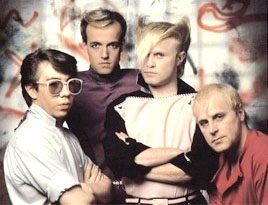
It was the 1980s, a lot of crap was flying around. But I liked A Flock of Seagulls...just not the hair.

I'm inclined to agree with the crap part. English is weird enough without all the superlatives. Thanks to the BBC History Magazine, we can blame the bored people in the 1400s. Many were first recorded in the 15th century in publications known as Books of Courtesy: manuals on the various aspects of noble living, designed to prevent young aristocrats from embarrassing themselves by saying the wrong thing at court.

The earliest of these documents to survive to the present day was The Egerton Manuscript, dating from around 1450, which featured a list of 106 collective nouns. Several other manuscripts followed, the most influential of which appeared in 1486 in The Book of St Albans – a treatise on hunting, hawking and heraldry, written mostly in verse and attributed to the nun Dame Juliana Barnes (sometimes written Berners), prioress of the Priory of St Mary of Sopwell, near the town of St Albans. This list features 164 collective nouns, beginning with those describing the ‘beasts of the chase’, but extending to include a wide range of animals and birds.

According to the Oxford dictionary, most are fanciful or humorous terms which probably never had any real currency, but have been taken up by antiquarian writers, notably Joseph Strutt in Sports and Pastimes of England (1801).

Some of my favorites:

a blush of boys
a bevy of ladies
a faith of merchants
a pity of prisoners
a clowder or glaring of cats
a herd of cranes
a busyness of ferrets
a fluther or smack or jellyfish
a watch of nightingales
an unkindness of ravens
a drift of wild pigs
a zeal of zebras
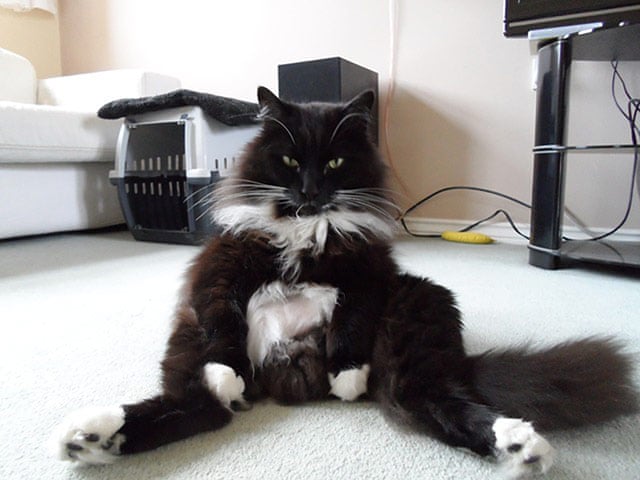
A cute clowder of cats! Mew!

Tuesday, 17 March 2015

Kiss Me We're All Irish: St. Paddy's Day

At the Montreal Parade, because there's a lot of Leprechauns there...

Happy Green Beer day everyone! Many Canadians and Americans, regardless of their heritage, will be out celebrating Saint Patrick’s day. Modern festivities include Irish and Celtic music, lots of food, and lots of beer. While this is the tradition in Canada, the saint’s day was originally a day of prayer.

Someone actually made a St. Patrick crochet doll. Where's the snakes?
For centuries, St. Patrick’s day was celebrated as a holy day. St. Patrick was a Roman-British priest that brought Christianity to Ireland. He also is credited with driving all the snakes out of Ireland, but we know where they all went (looking at you, England). He is said to have died on 17 March 461 AD. His popularity in Ireland grew to being named the country’s patron saint. By the 900s, the Irish celebrated his memory by attending church and holding feasts. It was made a recognized Catholic feast day in the 1600s. It falls during the Christian season of Lent, and Lent’s tight prohibitions against the eating of meat were released. After attending mass, people would dance, drink and enjoy the traditional meal of corned beef (Irish bacon and just awesome) and cabbage.

One big part of modern celebrations is massive parades. The first one was not in Ireland, but was held in America, on March 17, 1762. Irish soldiers serving in the English military marched in New Amsterdam (New York), were trying to keep their own culture alive in this new country. New York City became a major centre for Irish Diaspora, and the parades continued and spread to all parts of North America. More than one hundred parades are now held, and have expanded into Irish festivals such as the Irish Association of Manitoba three-day festival of culture in the week of St Patrick's Day.

At the Boston Parade: "Bloody hell, Bobby! That ain't St. Nick - he just gave us a bag of snakes!"

Another tradition is to wear green on the day of; it is said that St. Patrick taught the Irish about the trinity (Father, son and the holy spirit) by using a clover. This may be where the North American tradition of wearing green and clovers came from. However, the color was long considered to be unlucky in Ireland. Irish folklore holds that green is the favorite color of the fairies. In modern celebrations, however, the Irish use the clover green in celebrations.

The more modern drinking aspect of St. Patrick’s day happened in North America, not Ireland, until very recently. Up until the 1970s, St. Patrick’s was seen as a holy day only and pubs were closed. When that rule was lifted, more people went back to the tradition of feast and lifting a few drinks. A major St. Patrick’s festival is held in Dublin to bring tourists and locals together to celebrate Irish culture. So as my Great-grandad would have said: sláinte! (Cheers and get wasted)


Irish whiskey Irish dancing Shamrocks Book of Kells Uilleann pipes ...
Whiskey, music, dancing, rugby with an edge of cool castles: these are my kind of people. Could do without the Bono though.

Monday, 23 February 2015

History of Yoga: And Yoga Cats!


Part of a serious practice is corpse pose. Feel the ahhhhhh.

Yoga is the answer for a lot of my pain, mentally and physically. A good workout or a deep yoga nidra and I'm less likely to try and chew off my own arm, or someone else. But I'm not crazy and think it's going to cure all: not once have I heard a real teacher say, "Screw modern meds for your cancer of the eyelash, just do yoga." Recently I'm reading a lot of crap on line where they claim just that. I call bullshit.

I went to a class to get some help with my alignment (because if you do it wrong, it's all sorts of bad). There I asked my teacher what his understanding of the history of yoga. He said that while many people try to say it's ancient, and that's partly true. However, the modern form with all these funky town moves were invented in the 1960s. We had a great chat, and this article came out of our discussion. His basic points, and what texts I've been reading are pretty clear: it's not about the clothes, the props, the hip inner city studios, or putting your foot behind your head. But it is fun, there's cats!

Cat yoga: buddha cat
Cookie the Buddha Cat in the beginnings of a forward fold.


You Keep Using That Word...


...but I don't know if you know what it means. Yoga is a Sanskrit term, the language of ancient India. In A History of Indian Philosophy, commentators on the ancient Sanskrit texts like the Yoga Sutras of Patanjali, can't quite agree on its original meaning. The root yuj samādhau derived from either of two roots, yujir yoga (to yoke) or yuj samādhau (concentrate, concentration).

The term "yoga" has been applied to a variety of practices and methods. The majority are based in the Hindu schools of thought:  Jnana Yoga, Bhakti Yoga, Karma Yoga, Laya Yoga, Hatha Yoga, and Ashtanga Yoga (also called Raja Yoga.). I'm not going into all of them or you'll wonder if I'm a little yoga nuts, but all you need to know is that it's closely associated with the meditative practices in Hinduism, Buddhism, and Jainism, and yoga is viewed differently by each of these schools of Hindu philosophy. The earliest signs of yoga appear in ancient India. Evidence of yoga postures were found on artifacts that date back to 3000 B.C. Evidence of yoga is found in the oldest-existing text, Rig-Veda. Rig-Veda is a composition of hymns. Topics of the Rig-Veda include prayer, divine harmony, and greater being. But for me, the quote that sums it all up:

"The traditional purpose of Yoga, however, has always been to bring about a profound transformation in the person through the transcendence of the ego," (Feuerstein 3)


Yoga and Independence

To get an overall idea, my teacher directed me to the excellent material by Mark Singleton online and books. He writes that the modern practice is a branch of the giant tree of yoga. In India, the practice was focused less on the physical and more on Pranayama (expansion of the vital energy by means of breath), dharana (focus, or placement of the mental faculty), and nada (sound). At the end of the 19th century, yoga was introduced to Europe and North America by English educated Indians as a practice of meditation, breath and positive thinking. A lack of interest in poses was a high case, low caste issue, as the only ones who practiced them were mendicants who performed severe and rigorous postures for money, and partly to the centuries of hostility and ridicule by Western colonialists, journalists, and scholars.

Singleton believes that the fusion of poses and the mental came together in India as part of the struggle for national independence. By building better bodies, the leaders believed it would make for a better nation and improve the chances of success in the event "of a violent struggle against the colonizers". They used a wide variety of exercise systems melding Western areobatics with traditional Indian practices like wrestling. The name given to these strength-building regimes was “yoga.”

One nationalist physical culture reformist Manick Rao, blended European gymnastics and weight-resistance exercises with revived Indian techniques for combat and strength. Rao’s most famous student was Swami Kuvalayananda (1883-1966). During the 1920s, Kuvalayananda, along with his rival and gurubhai (“guru brother”) Sri Yogendra (1897-1989), blended asanas and indigenous Indian physical culture systems with the latest European techniques of gymnastics and naturopathy.The other highly influential figure in the development of modern asana practice in 20th-century India was, of course, T. Krishnamacharya (1888-1989), who studied at Kuvalayananda’s institute in the early 1930s and went on to teach some of the most influential global yoga teachers of the 20th century, like B.K.S. Iyengar, K. Pattabhi Jois, Indra Devi, and T.K.V. Desikachar.

I agree with Singleton 100 percent when he speaks on the purpose of knowing yoga's history:
Beyond mere history for history’s sake, learning about yoga’s recent past gives us a necessary and powerful lens for seeing our relationship with tradition, ancient and modern. At its best, modern yoga scholarship is an expression of today’s most urgently needed yogic virtue, viveka (“discernment” or “right judgment”). Understanding yoga’s history and tangled, ancient roots brings us that much closer to true, clear seeing. It may also help to move us to a more mature phase of yoga practice for the 21st century.
On the note of maturity...